
Work / Vodafone · MWC 2026
Case study · Mobile World Congress
A stand youcould play with.
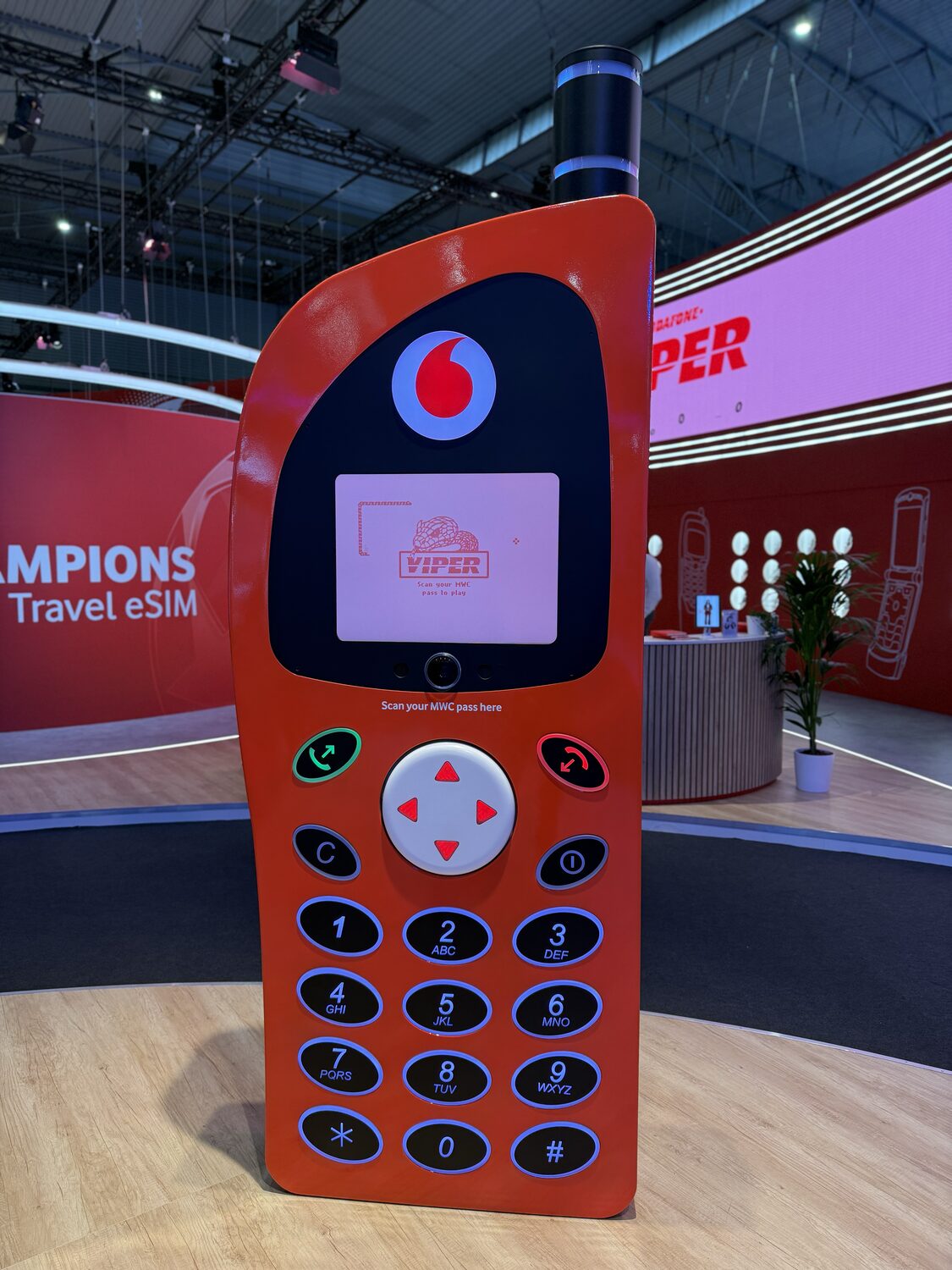
For Vodafone's stand at Mobile World Congress 2026, we built the hero interactive — a person-sized, fully playable phone — the set pieces around it, and the show-control brain that made every screen, light and game on the stand move as one.
The brief
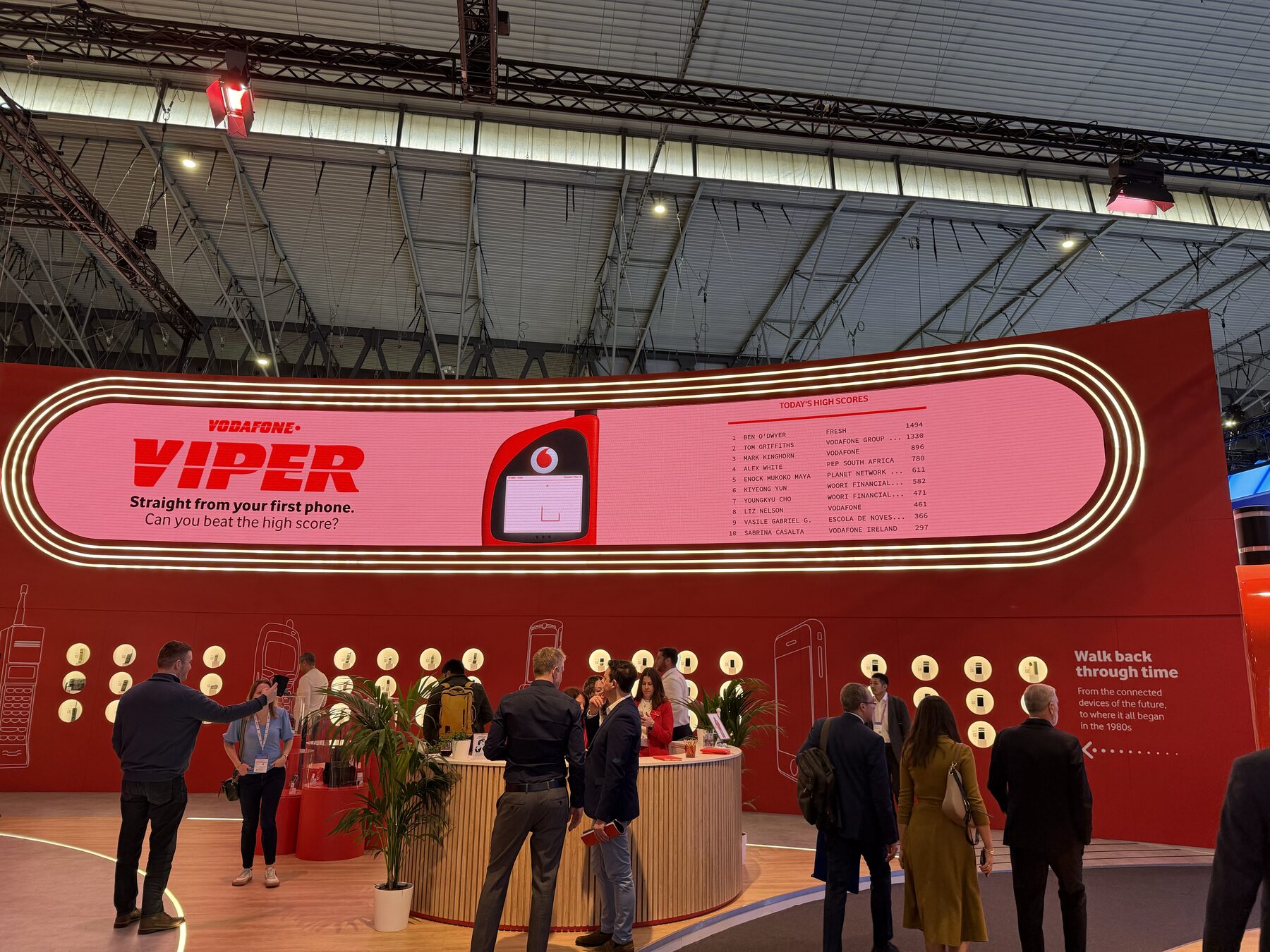
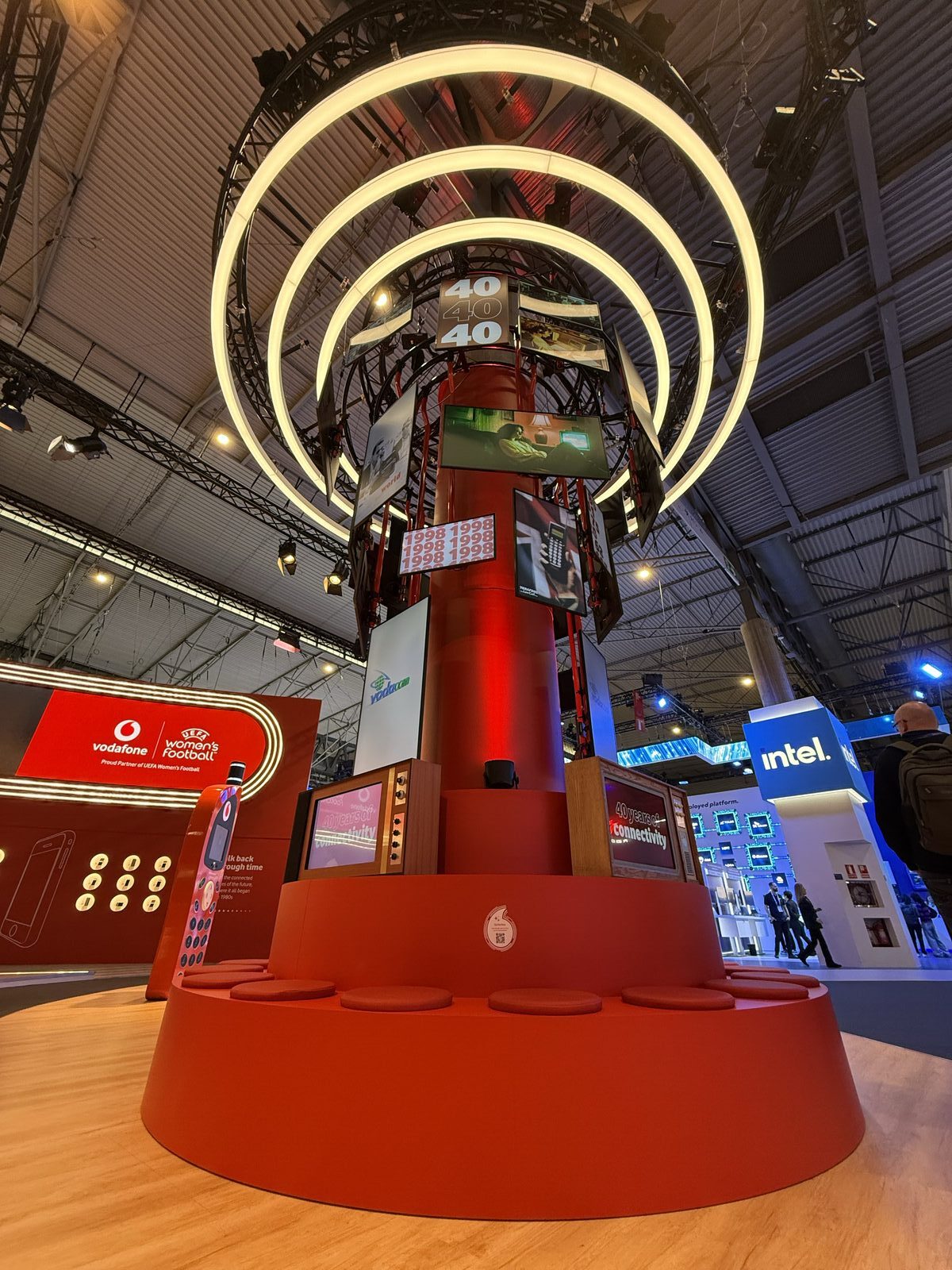
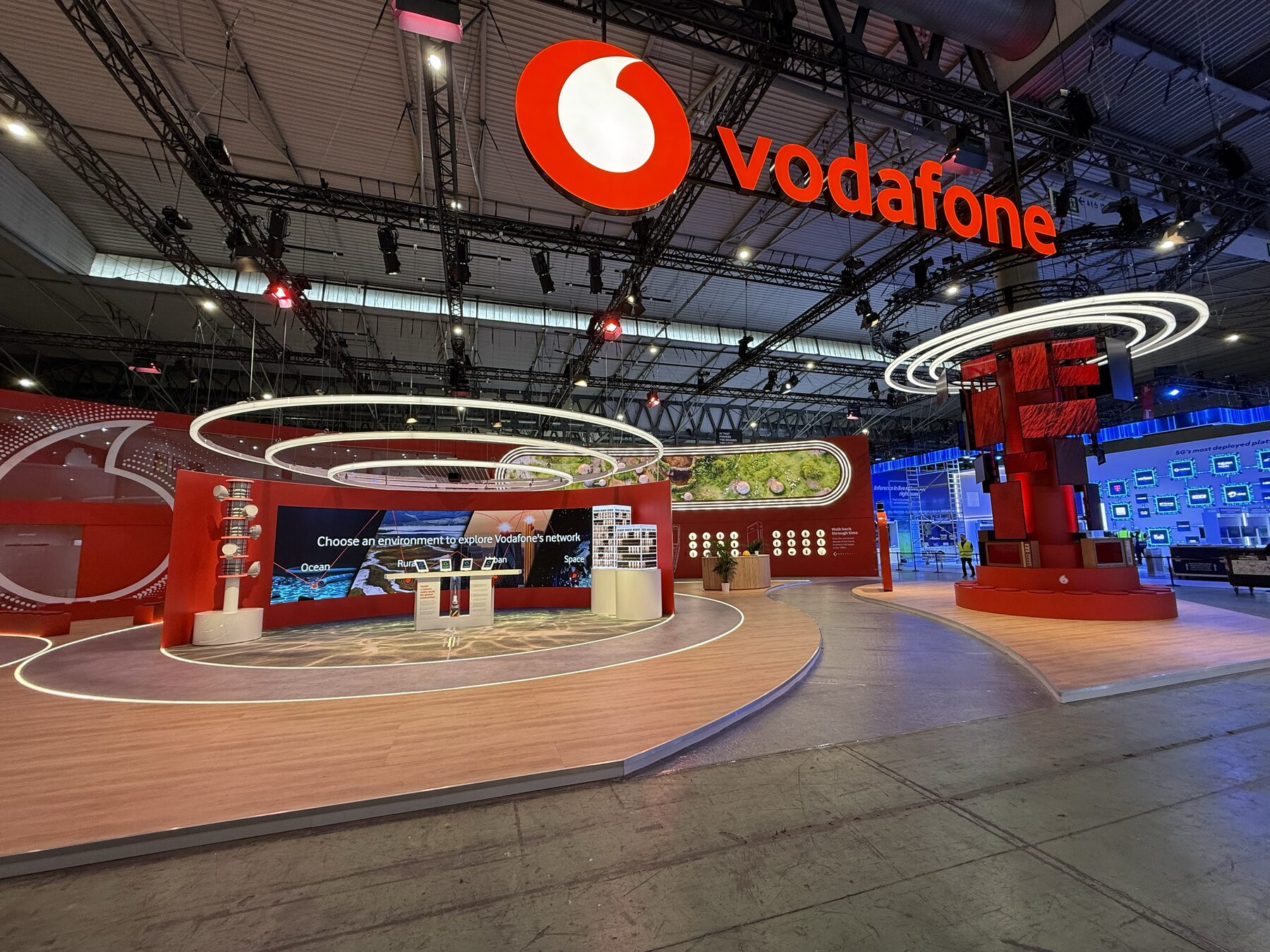
MWC is the busiest hall in tech — thousands of stands fighting for the same footfall. fresh's stand for Vodafone needed moments that stopped people walking past: things to play, to touch, to queue for — all tied into a single, synchronised show across a 14.5-metre curved LED wall, a six-metre 30-screen "tornado" attractor and a hall full of screens. Our job, over many months embedded in fresh's team, was to build the bespoke interactive pieces and the technology that made the whole stand behave as one connected experience.
What we built
- 01
Viper — the giant phone
A person-sized, fully playable phone: the fabrication, the integrated LED, and the custom control hardware and software — built hand-in-glove with Vodafone's developers, marrying our controls to their game code.
- 02
The 30-screen attractor
Four retro TV cases we built to house modern LED monitors — folded into a six-metre, thirty-screen tornado of displays driven as one seamless 3D canvas by Creative Technology's Pixera media servers.
- 03
The undersea cable
An oversized model of the subsea cable that carries the world's data, housed in a lit polycarbonate tube — the centrepiece of the Seabed to the Stars console.
- 04
Four iPads, one canvas
Custom iPad apps whose content flowed between screens with millisecond-level latency — four devices on plinths that read as a single, continuous interface.
- 05
The TouchDesigner brain
One source of truth for the whole interactive area — reading every touch, answering every device, animating the floor tape and overhead rings, and cueing Pixera over Art-Net.
- 06
The 3 m cell tower
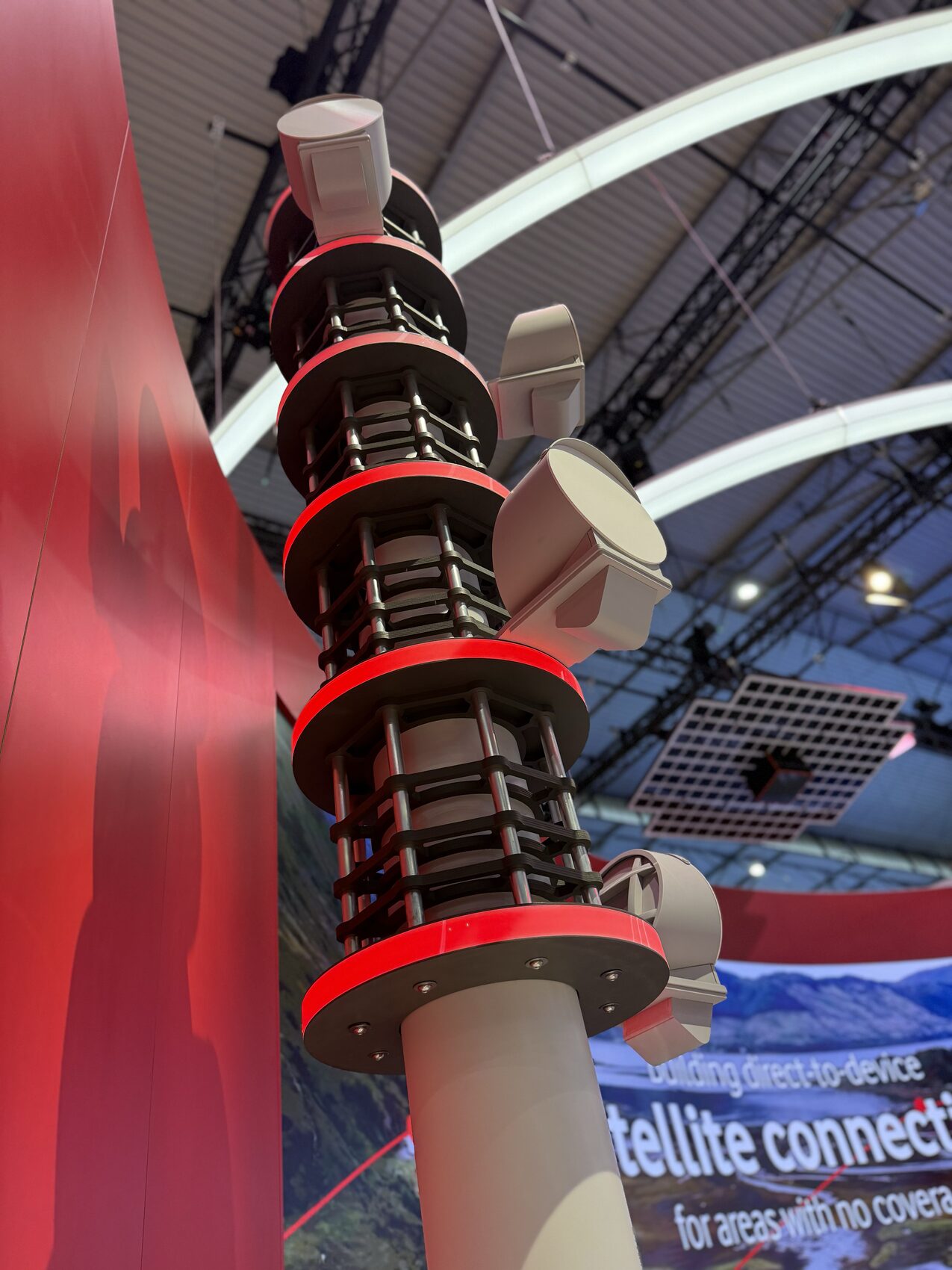
A three-metre Vodafone cell tower model with discs of LED light, wired into the same system — firing at exactly the right beat of the journey playing out on the iPads.
Seabed to the Stars — one brain, one canvas
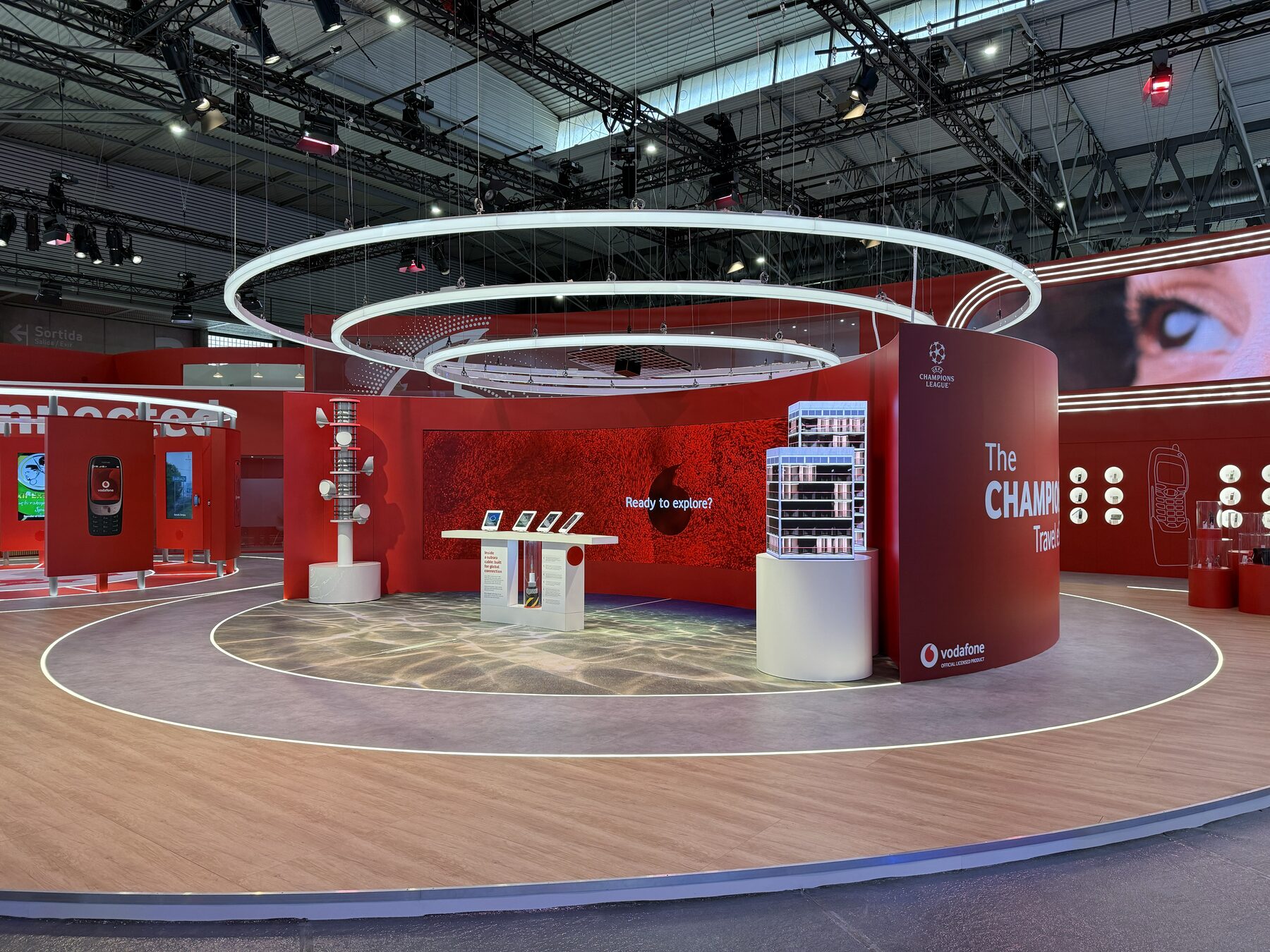
The stand's flagship interactive traced the journey your data makes, in four chapters you could hold in your hand: Sea, Rural, Urban and Space. Pick one on the iPads and that corner of the stand became its world — a model waking up, a run of light through the floor, and full-screen video chapters on the 14.5-metre curved LED wall, all at once.
Each chapter had its own hardware. Sea lit the undersea-cable model in its polycarbonate tube and ran light north–south through the pixel tape in the floor. Rural fired the LED discs up the three-metre cell tower and ran the western tape. Urban played video across two LED tower blocks — office buildings made of light — and ran the eastern tape. And Space woke an actual satellite hanging above the stand, ringed by three concentric hoops of LED.
Underneath it all sat a TouchDesigner system we designed to be the single source of truth. Every touch on every iPad fed back to it over OSC, and it answered every device at once: the four custom iPad apps behaved like one screen cut into four, content flowing between them with millisecond-level latency. The same brain animated every run of floor tape, cued every model, and pushed Art-Net to Pixera so the wall's chapters landed in the same breath. A complicated integration on a custom protocol — that felt, to the person at the iPad, completely fluid.
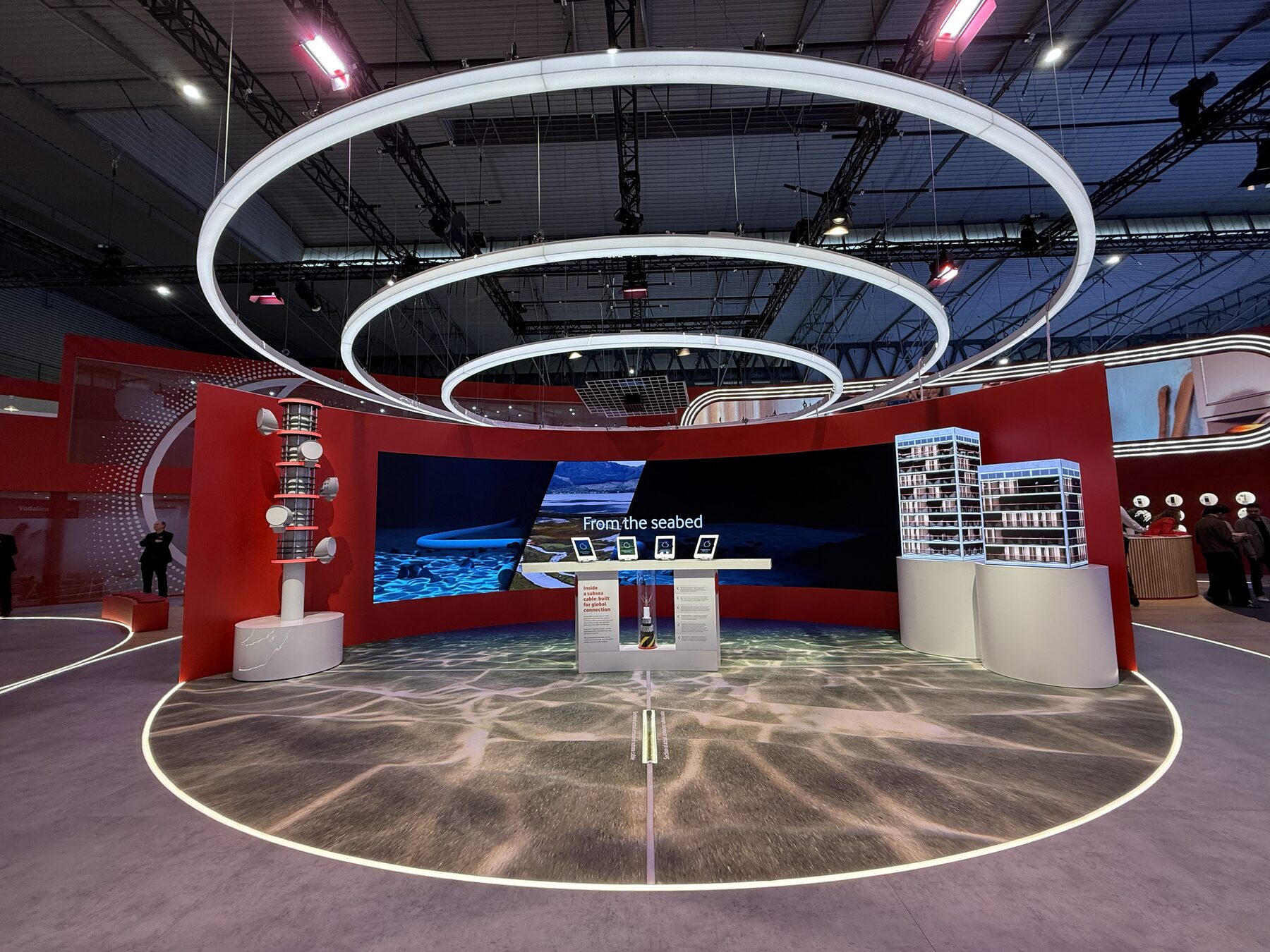
Tap an iPad — every tap plays the next chapter. First up: Sea.
Embedded, not bolted on
This wasn't a prop drop-shipped to a loading dock. Over many months we worked as part of the fresh team — tens of calls alongside them and Vodafone, from first concepts through developer liaison to the show floor. The Viper game was Vodafone's own code; we worked hand-in-glove with their developers to wrap it in our hardware, controls and lighting. To the client, one team delivered the stand.
If you're an agency, this is a thing we do: we slot into your team, carry your standards into the room with your client, and build the interactive layer under your banner. You keep the relationship — we make the technology disappear into the work.
One cohesive product, two teams, no seams.
On the stand
Credits
- Client
- Vodafone
- Agency
- fresh
- Media servers & LED
- Creative Technology
- Game code
- Vodafone's development team
- Interactive builds, electronics, iPad apps & show integration
- HALF GREY BEAR